
 The Devil Commands (1941, 65 mins, B&W) directed by Edward Dymtrk, stars Boris Karloff as a scientist studying brain waves who becomes obsessed trying to communicate with his recently deceased wife who was killed in a car crash. This film is considered the best and most interesting of the Columbia horror film series of that era (Dixon, 56). An eerie atmospheric tone is set immediately reminiscent of the movies The Haunting (1963, based on Shirley Jackson's novel, The Haunting of Hill House, 1959) and Alfred Hitchcock's Rebecca (1940, based on the 1938 novel of the same name by Daphine DuMaurier). In a voice-over the main character in Rebecca begins her tale, "Last night I dreamt I went to Manderley again..." In The Devil Commands a similar foreboding tonal quality is captured with the voice-over that begins the movie, "No one goes near my father's house. No one dares..." That same mysterious cadence is captured in The Haunting by the character, Mrs. Dudley, who reminds the guests of Hill House, "We live in town, miles away... there won't be anyone around if you need help... We couldn't hear you. In the night. No one could. No one lives any nearer than town. No one will come any nearer than that. In the night. In the dark."
Available for rental at Netflix - The Devil Commands
The Seventh Victim (1943, 131 mins, B&W) directed by Mark Robson and produced by famous Val Lewton, starring Tom Conway, Jean Brooks and introducing Kim Hunter. This intelligent psychological horror film (shot in 24 days in May 1943) rates among Lewton's best. Mary (Kim Hunter) leaves boarding school to go to New York to search for her missing sister Jacqueline (Jean Brooks) who, Mary discovers, has been abducted by a group of Satan worshipers. According to Dixon, the film perfectly reflects Lewton's personal views on the tenuousness of existence (Dixon, 47). This is a tale of murder and intrigue set in a world where evil exist and the forces to defeat it are weakened in their efforts.
The Seventh Victim is a bleak, somber film populated with people who try to escape their preoccupation with death (Soren, 125). Close-ups, up-angle shots, and shadows all add to the film's noir atmosphere. A sense of hopelessness permeates the film in which its characters struggle to survive as they lead lives of quiet desperation.
Available for rental at Netflix - The Seventh Victim
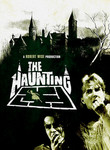 The Haunting (1963, 112 mins, B&W) directed by Robert Wise, starring Julie Harris and Clara Bloom. Based on the Shirley Jackson novel, The Haunting of Hill House. This classic horror movie is about a paranormal investigator who recruits three people to help uncover the secrets of Hill House, a
mansion overwhelmed by spirits of its former residents. This is a first-class psychological horror thriller!
The Haunting (1963, 112 mins, B&W) directed by Robert Wise, starring Julie Harris and Clara Bloom. Based on the Shirley Jackson novel, The Haunting of Hill House. This classic horror movie is about a paranormal investigator who recruits three people to help uncover the secrets of Hill House, a
mansion overwhelmed by spirits of its former residents. This is a first-class psychological horror thriller!Available for rental at Netflix - The Haunting
Seance on a Wet Afternoon (1964, 115 mins, B&W) directed by Bryan Forbes, starring Kim Stanley and Richard Attenborough. This is a well-acted, excellent scarey paranormal movie.
Available for rental at Netflix - Seance on a Wet Afternoon
__________
Dixon, Wheeler Winston. A History of Horror. New Brunswick, Rutgers University Press, 2011.
Soren, David. The Rise and Fall of the Horror Film. Baltimore, Luminary Press, 1997.


